AFRDI and GECA test two different things. AFRDI (Australasian Furnishing Research and Development Institute) is independent durability testing against AS/NZS 4438 — Level 6 is the practical minimum for genuine daily commercial use. GECA (Good Environmental Choice Australia) is an ecolabel covering material sourcing, chemical content and manufacturing conditions. A chair can pass one without the other.
Does AFRDI testing mean a chair will hold up?
AFRDI stands for the Australasian Furnishing Research and Development Institute — an independent, not-for-profit body that physically tests furniture against the Australian and New Zealand standard AS/NZS 4438. This isn't a paperwork exercise. Chairs go through a battery of tests: repeated loading cycles that simulate years of daily use, impact tests, tipping and rolling stability checks, and weight-capacity verification.
The results are graded on a level system:
- Level 4 — general office use, roughly 50,000 fatigue cycles
- Level 5 — more demanding commercial environments, around 100,000 cycles
- Level 6 — severe commercial use, above 200,000 fatigue cycles, with higher-force impact and load testing
For most Australian workplaces — offices, government departments, schools, healthcare settings — Level 6 is the practical minimum, and it's frequently a hard requirement in government and education procurement tenders. A chair with no AFRDI rating at all may look identical to a certified one in a product photo, but there's no independent verification behind it.
When you're comparing suppliers, it's worth asking directly: what AFRDI level is this chair rated to, and can you provide the certificate number? A genuine certification is traceable — a vague “commercial grade” claim isn't.
What does GECA certification actually assess?
GECA — Good Environmental Choice Australia — is a different kind of certification entirely. It's Australia's ecolabelling program, assessing products against criteria that go well beyond the chair itself: material sourcing, chemical content, manufacturing conditions, worker welfare, and end-of-life recyclability.
This matters for two practical reasons. First, sustainable procurement requirements are becoming more common in government and large-organisation tenders — GECA certification is one of the recognised ways to demonstrate compliance without a lengthy custom audit. Second, it's a genuine signal about how and where a product is made, not just how long it lasts.
Where AFRDI answers “will this chair survive five years of daily use,” GECA answers “was this chair made responsibly, and is it a lower-impact choice.”
Do I need both AFRDI and GECA certification?
A chair can pass AFRDI without meeting GECA's environmental and social criteria, and vice versa — they're not substitutes for each other. For a workplace that needs to justify a seating decision to a board, a tender panel, or a sustainability report, having visibility into both gives a much more complete picture than either one alone.
What should I ask a supplier before buying?
If you're evaluating chairs for a fitout or bulk order, a few direct questions cut through most of the marketing language:
- What AFRDI level is this product certified to, and what's the certificate number?
- Is that certification independently tested, or self-declared by the manufacturer?
- Is the chair GECA certified, or does it hold an equivalent recognised ecolabel?
- What's the structural warranty on the frame and mechanism, and does it match the commercial-use rating?
A supplier who can answer these specifically — rather than in general terms — is one who's actually done the testing, not just used the language.
Which Corporate Chair Systems chairs are AFRDI tested?
These chairs in our range carry AFRDI testing:
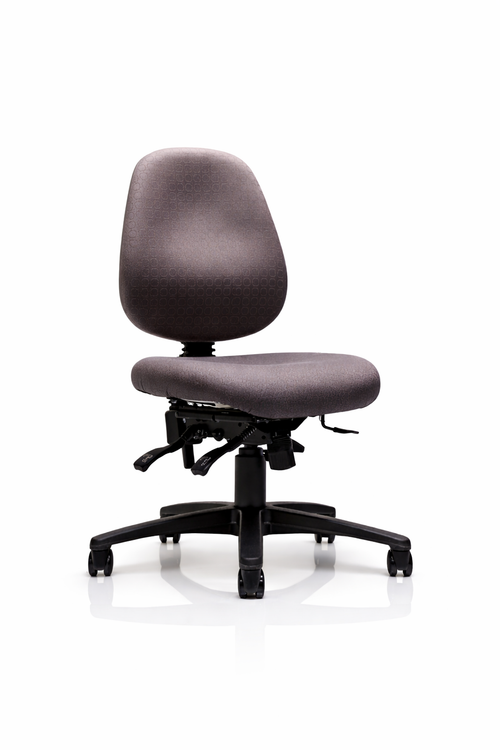
- Magic Chair — exceeds AFRDI Level 6 and is built to withstand 24-hour intensive use. AS/NZS 4438:1997 compliant, with a 160kg load rating. Our choice for workstations, shift work and control rooms.
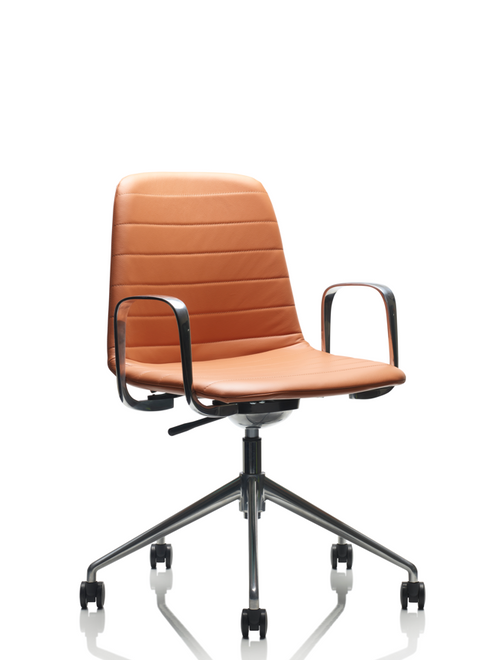
- Italian Collection — AFRDI compliant (meets all testing requirements). For meeting rooms, boardrooms, conference rooms and canteens.
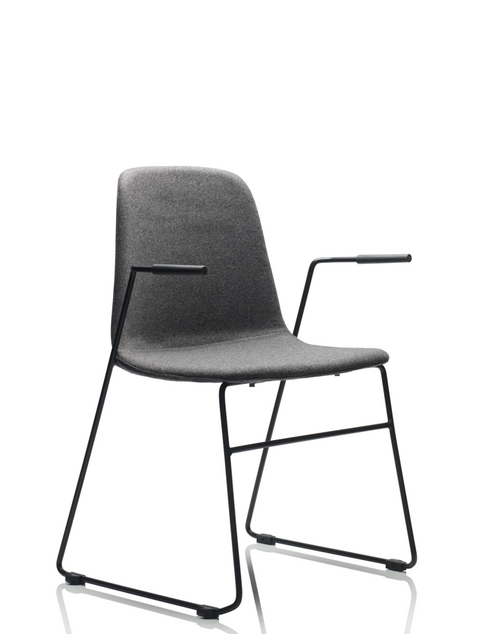
- Italian Sled — AFRDI compliant (meets all testing requirements). For waiting rooms, canteens and breakout areas.
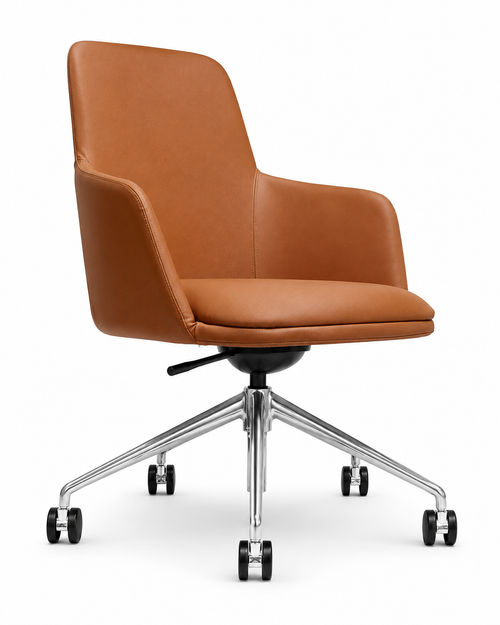
- Soul Chair — AFRDI compliant (meets all testing requirements). A boardroom and meeting chair for long meetings.
Several other chairs are stated as compliant with AS/NZS 4438:1997, the standard AFRDI tests against, including the Zone, Ripple, Mona and Storm. Compliance and independent certification aren't the same claim, so if your specification needs a particular AFRDI level and certificate number for a chair, ask us and we'll confirm it in writing before you order.
Corporate Chair Systems has been designing and manufacturing commercial seating in Australia since 1989. If you're comparing certified seating options for your workplace, get in touch for guidance on what's right for your fitout.